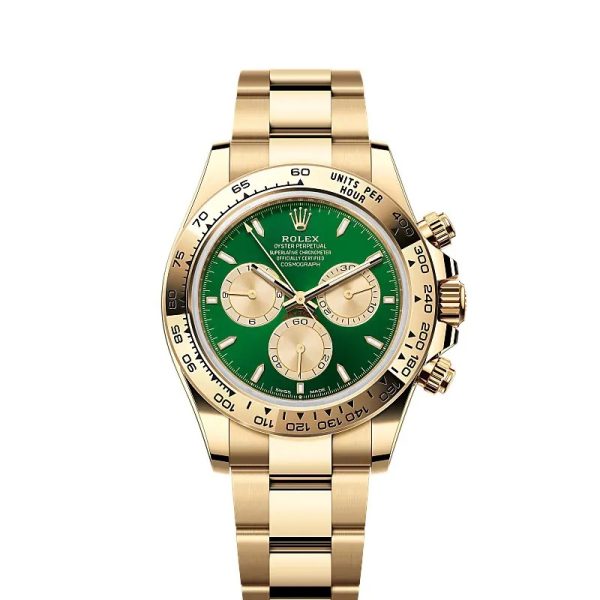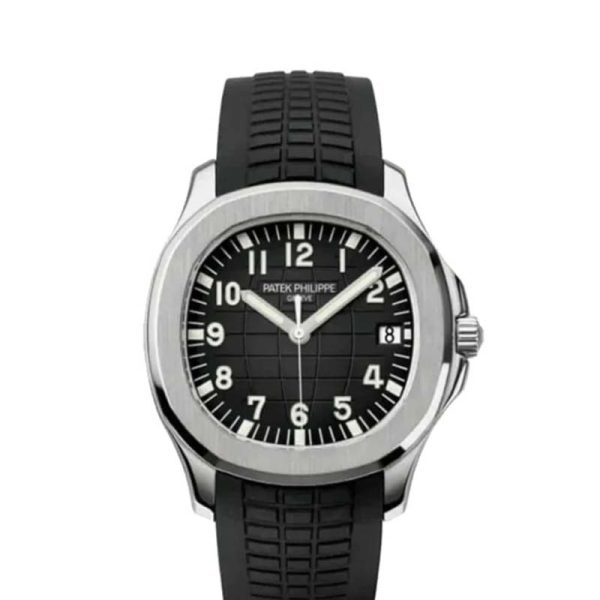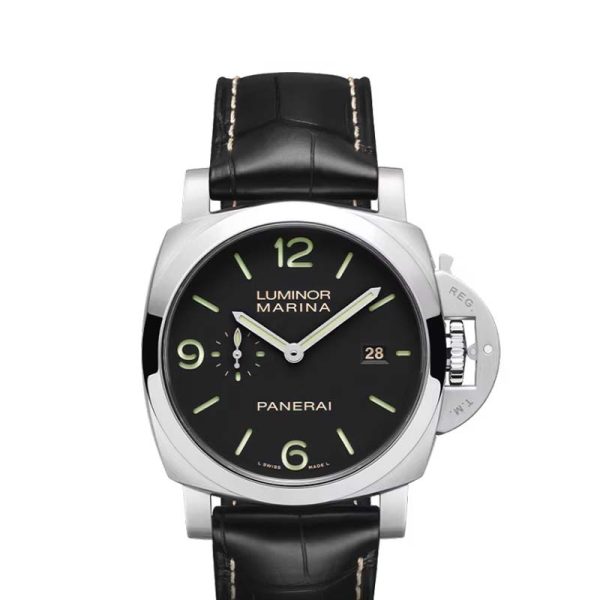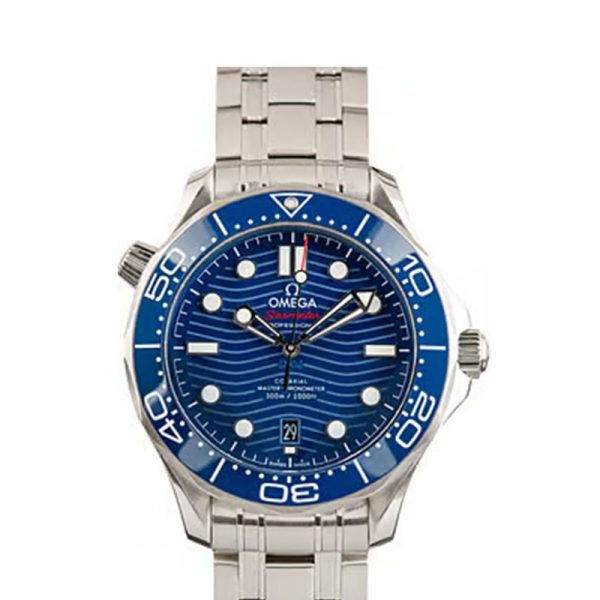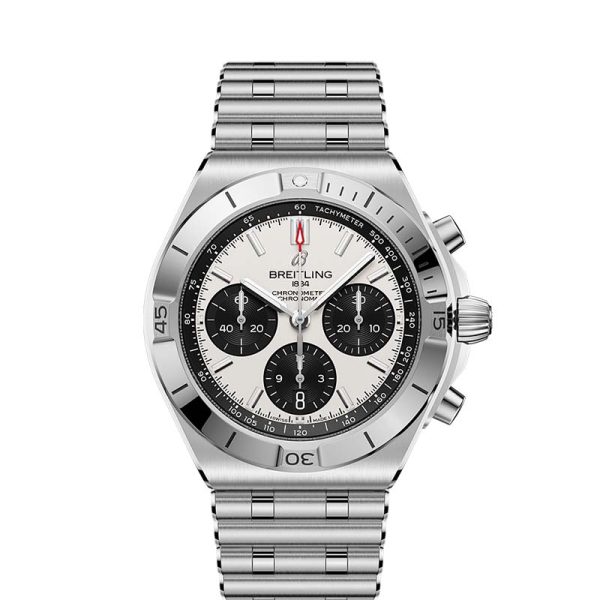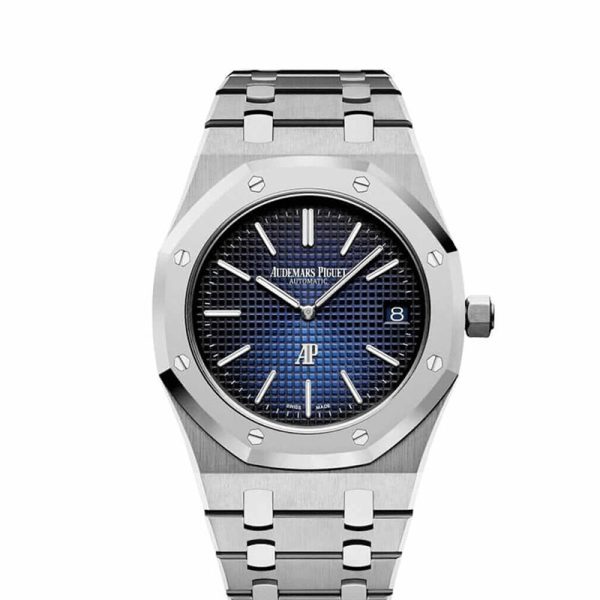

18K Gold-Plated
Gold-plating process for VS Factory watches
The VS factory employs PVD (Physical Vapor Deposition) and composite layering techniques to achieve a brilliant, durable gold finish; the coating is resistant to fading and peeling, ensuring the watch retains its pristine appearance over time.
PVD Gold Plating Technology
PVD (Physical Vapor Deposition) is a vacuum coating technology and the core process for gold plating high-end watches.
Composite lamination process
It is difficult for a single-layer coating to simultaneously achieve optimal adhesion, hardness, and color. The VS Factory employs a composite layering process, depositing multiple layers—each serving a specific function—to create a durable gold finish.
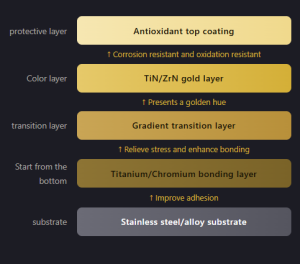
Five-layer composite structure
From the substrate to the surface, the coating is deposited layer by layer with a gradient transition. Each layer is in the micrometer range, and the overall coating is only a few micrometers thick, yet it carries multiple functions such as wear resistance, color development, and oxidation resistance.
Fade-resistant · Colorfast
The value of gold-plated finished products from the VS factory lies in the longevity of the gold finish; a multi-layered structure combined with vacuum deposition ensures a stable and enduring color.
Note: Although PVD coatings are highly wear-resistant, severe impacts or prolonged, intense friction against hard objects may still cause localized wear; please avoid rough handling or hard knocks.
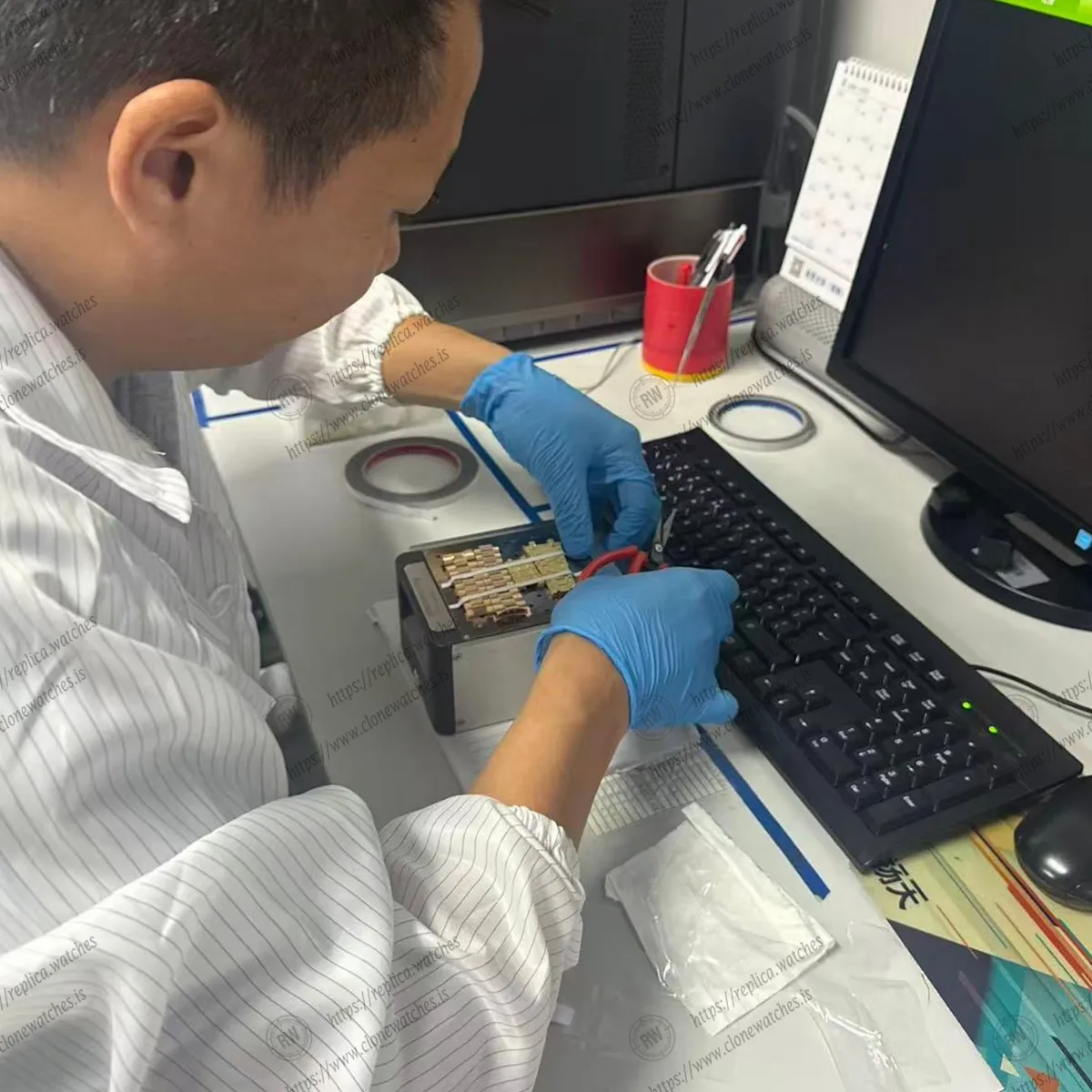
Inspection of VS Factory Gold-Plated Finished Products
Every gold-plated finished product from VS Factory undergoes a rigorous testing process to ensure that its color, adhesion, and durability meet established standards.
1.Coating thickness measurement
X-ray fluorescence (XRF) thickness gauges are used for the non-destructive measurement of coating thickness, supplemented by cross-sectional verification via the metallographic sectioning method, to ensure that the thickness of each layer meets specifications.
2.Adhesion testing
Cross-cut tests, thermal shock tests (thermal cycling), and bending tests verified that the coating is firmly bonded to the substrate and does not peel off.
3.Color consistency inspection
A spectrophotometer is used to measure Lab color values and compare them against standard color swatches, ensuring consistent gold tones across products within the same batch and between different batches.
4.Corrosion resistance test
Neutral salt spray tests and artificial sweat tests are conducted to verify the coating's resistance to corrosion and discoloration in humid, acidic/alkaline, and sweat-exposed environments.
5.Abrasion resistance test
Taber abrasion tests and eraser abrasion tests are used to simulate daily friction and evaluate the coating's wear resistance and color retention durability.
6.Appearance and Condition Inspection
Visually inspect surfaces for pinholes, scratches, and stains using a magnifying glass and microscope; for components with precious metal plating, re-verify the gold content via XRF to ensure the purity meets standards.
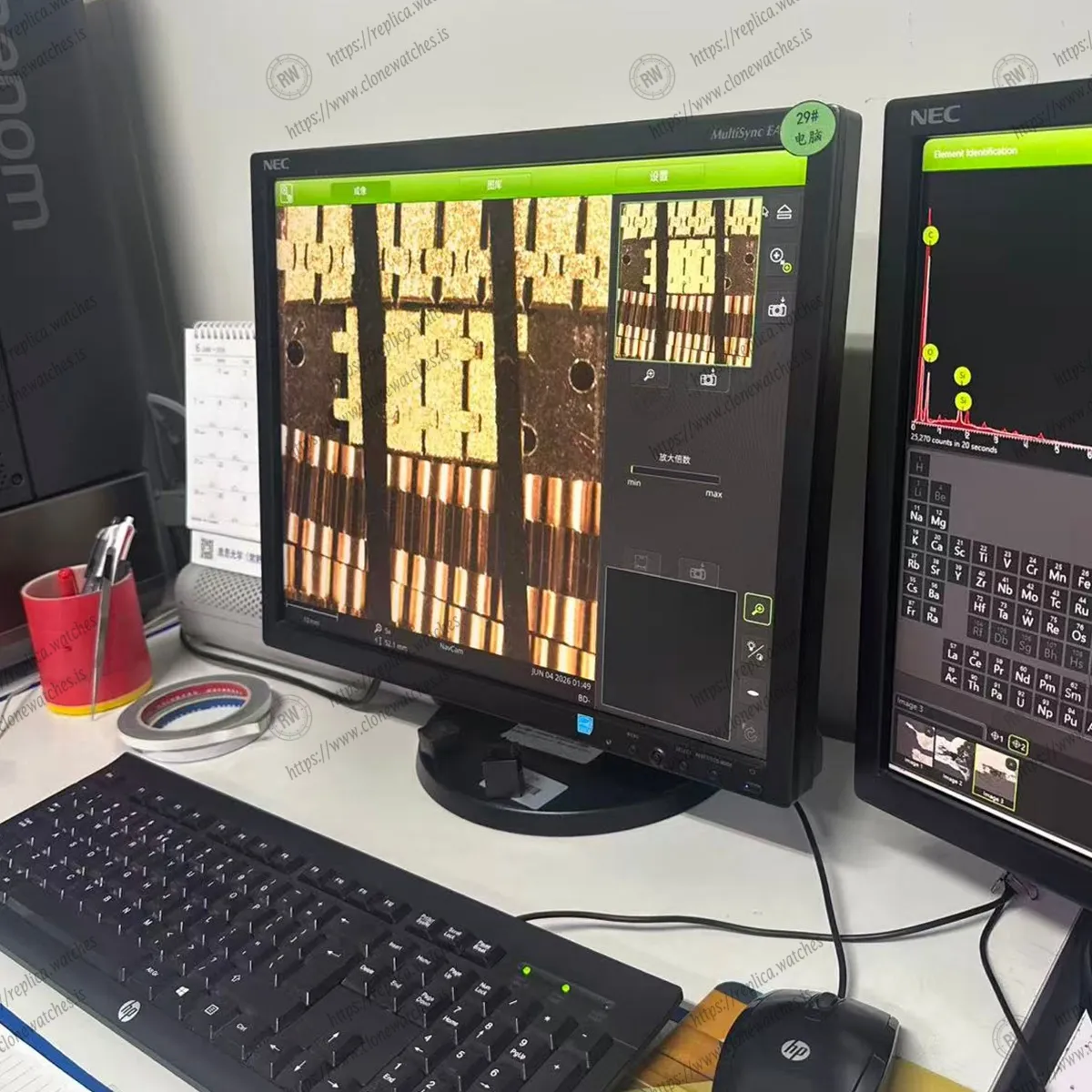
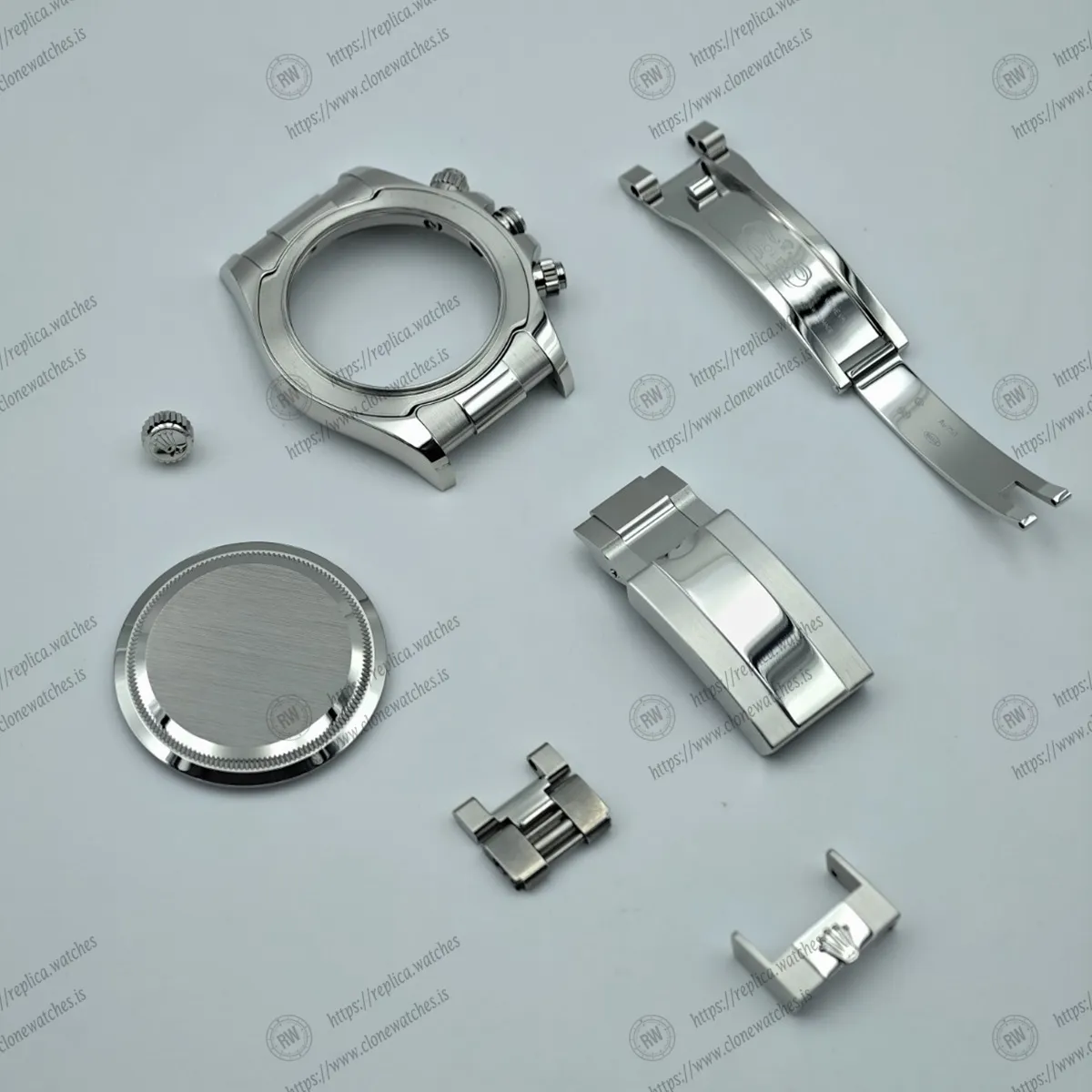
Showcase of VS Factory Gold-Plated Finished Products
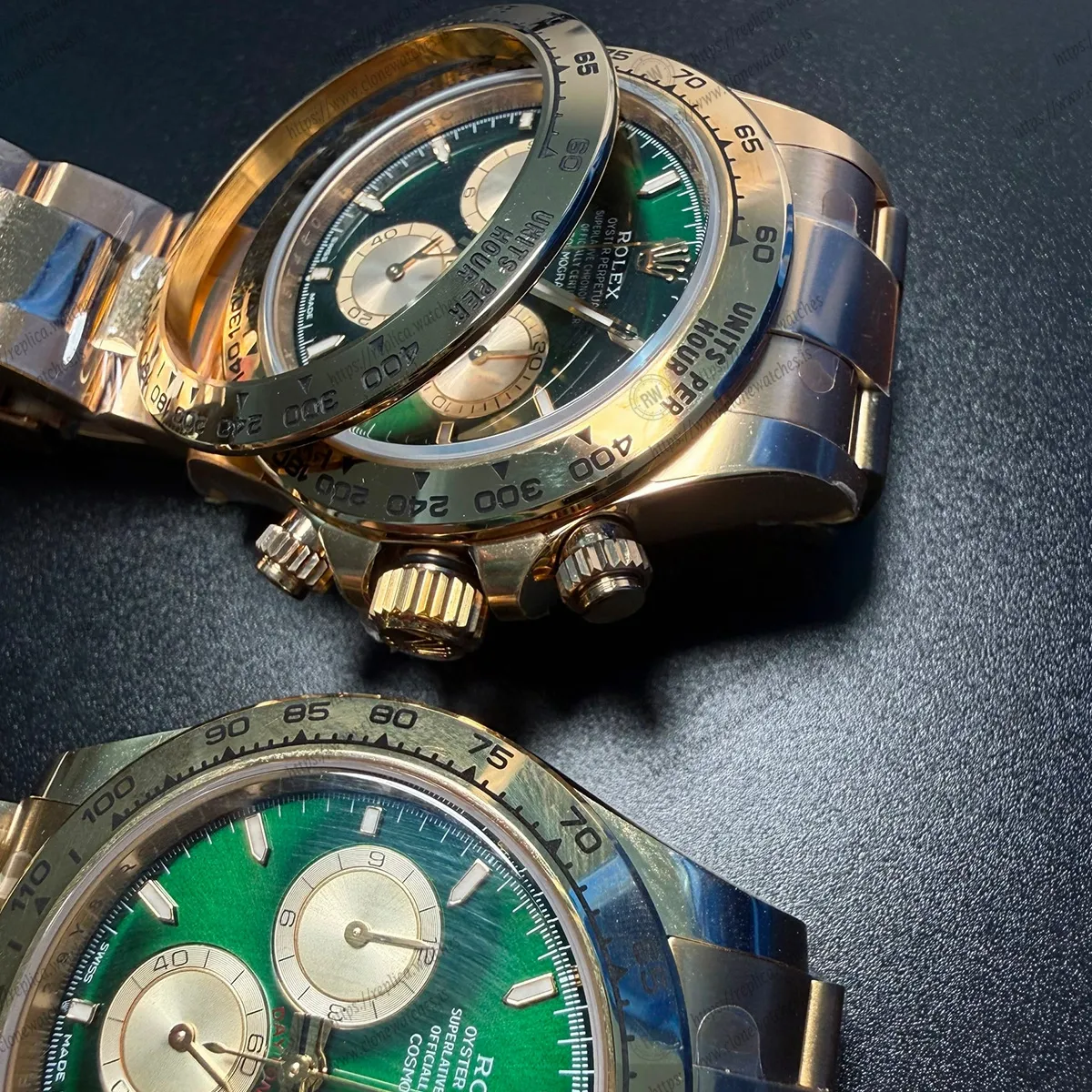
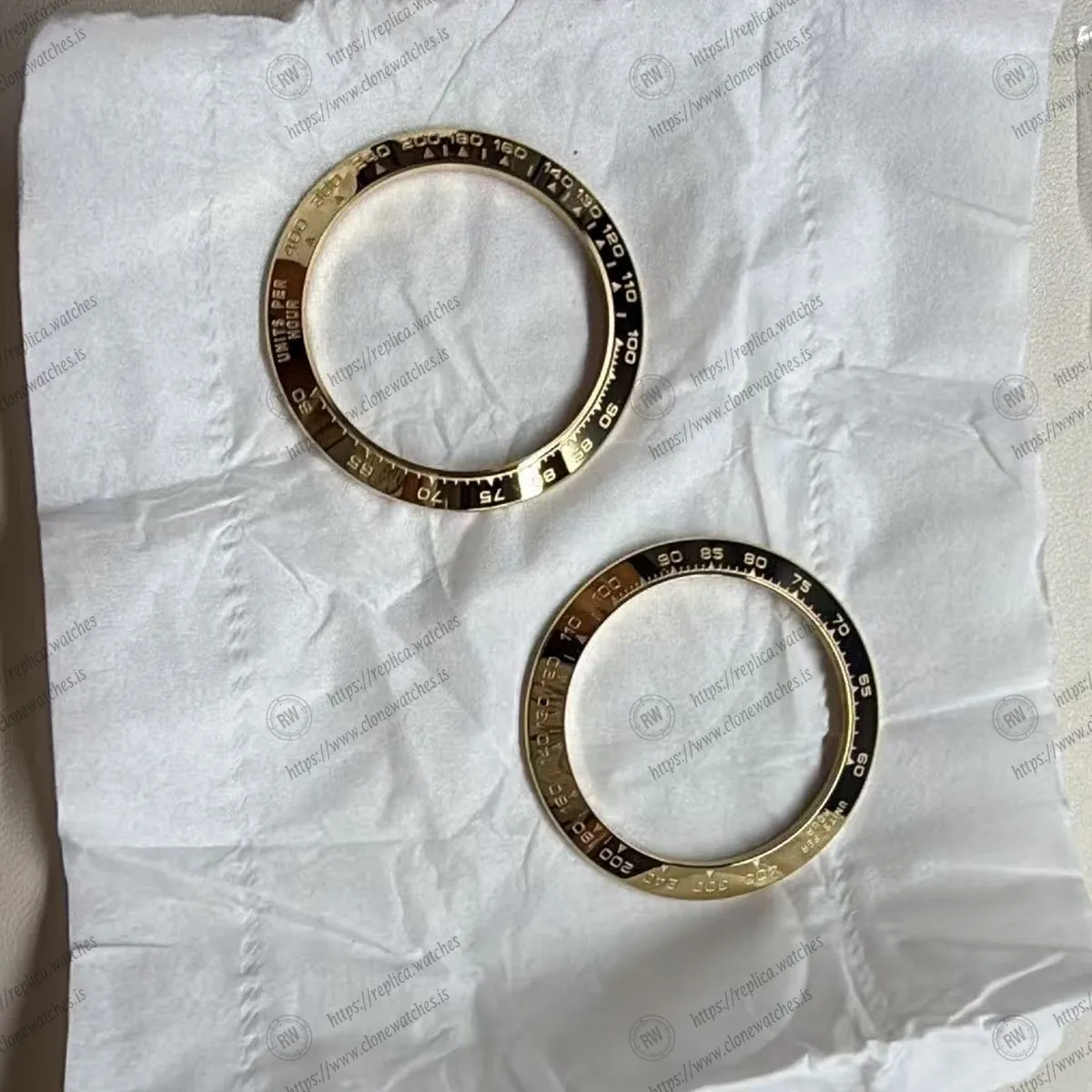
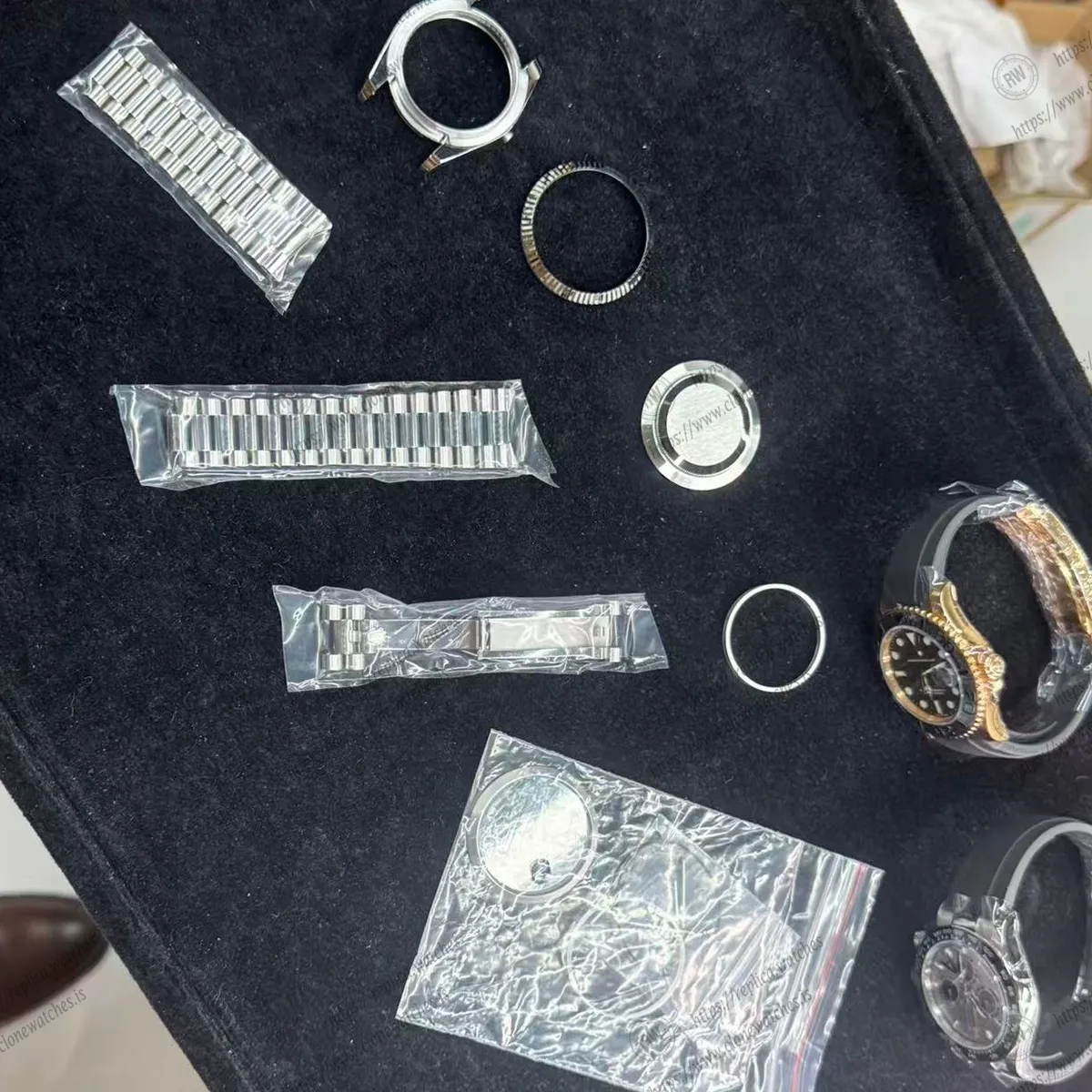
Traditional Electroplating vs PVD Gold Plating
See the advantages of PVD gold plating at a glance.
| Comparison items | Traditional electroplated gold | PVD gold plating |
|---|---|---|
| Process Principle | Electrochemical deposition | Vacuum physical vapor deposition |
| Adhesion | Weak, prone to peeling | Atomic-level bonding, extremely strong |
| Coating hardness | Low, easily worn | HV 2000+, extremely durable |
| fade resistant | Several months to a year | Color retention after normal wear for many years |
| Environmental protection | Cyanide-containing wastewater | Zero wastewater, environmentally friendly |
| Color selection | Relatively simple | A variety of adjustable gold/rose gold/champagne gold options are available. |
Are you ready to own a perfect artistic masterpiece right now?
Browse our collection to find a replica watch that suits your style, such as the Rolex Super Clone series.